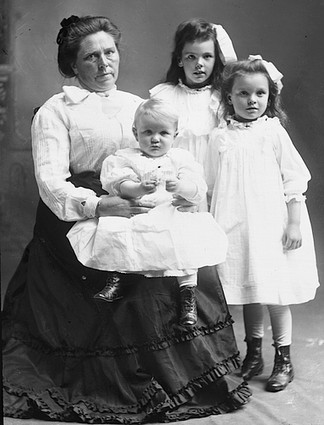
Belle Gunness was born Brynild Paulsdatter Størseth on November 11, 1859 near Selbu, Norway. In 1881, at the age of 21, she moved to the United States in search of wealth and gave herself the Americanized name of Bella (Belle) Petersen. Belle did indeed become wealthy, but not because she earned the money honestly. Quite the opposite, in fact.
It is believed that Belle killed at least 14 people, though some speculate that number could be as many as forty, earning herself a variety of nicknames including Hell’s Belle, the Black Widow, and Lady Bluebeard.
The truth of her crimes wasn’t known until her supposed death in 1908. In April of that year, the Gunness farmhouse in La Porte, Indiana burned to the ground. The body of a woman along with Belle’s three children were found and as investigators continued the search of the property, the partial remains of at least 11 other people were discovered.
But did she really die in the fire of 1908? After all, the body that was supposedly Belle’s was headless, making it impossible to positively identify during a time long before DNA testing. Also take into account the numerous sightings of her all over the country for decades after her “death.” It sure does make you wonder.
Belle’s Early Life
Belle’s life before coming to the United States is rather unclear. Most of her biographers agree that her parents were Paul Pedersen Størseth, a stonemason, and Berit Olsdatter. Belle was the youngest of eight children and her family lived on a small farm in Innbygda, about 60 km southeast of the largest city in central Norway at the time, Trondheim. In addition to running the farm, it was believed that her family were also circus performers and that sometimes Belle would appear with them as a tightrope walker.
Belle’s sister, Nellie (Anna) Larson, had emigrated to the United States when Belle was young. Belle wanted to follow in her sister’s steps, believing that there was more opportunity for her in America. To save up money for the trip across the ocean, she worked on a wealthy farm for several years.
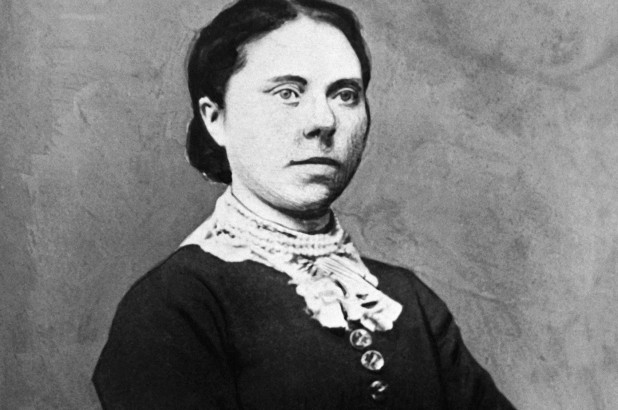
Though unverified, there are reports of a tragic event that may have happened to Belle as a young woman in Norway, which may give some insight as to why she came to be the evil person she was. The story was part of an Irish TV documentary that aired in 2006. According to documentary, in 1877, when Belle was around 18 years old, she went to a country dance while pregnant. While there, she was attacked by a man who kicked her in the stomach, causing her to miscarry the baby. The man who attacked her was from a wealthy and upstanding family and never prosecuted by Norwegian authorities. People who knew Belle during this time said that the attack and loss of the child changed her dramatically.
The Unfortunate Souls Who Met Belle Gunness
Mads Sorensen
When Belle first came to the United States from Norway in 1881, she settled in Chicago, where she worked as a servant girl until she married Mads Sorensen in 1884. Mads Ditlev Anton Sorenson was a department store night watchmen who was also originally from Norway. The Sorensen’s home was the first of several mysterious fires that happened during Belle’s life. With the insurance money they received from the house fire, they bought a confectionery store at the intersection of Grand Avenue and Elizabeth Street in Chicago. The business was unsuccessful and burned down within a year of opening. The Sorensen’s collected the fire insurance money from their destroyed business and used it to purchase a home in Austin, Illinois.
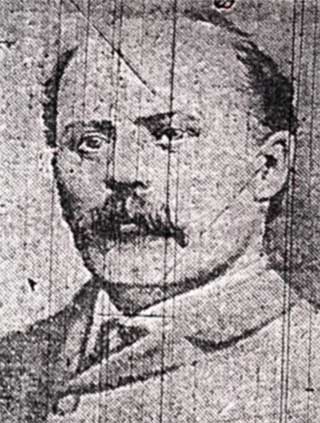
The couple had several children, though it is unclear whether Belle gave birth to them, adopted them, or if they were taken in as foster care. Two of these children died in infancy while under Belle’s care. Caroline died in 1896 and Alex in 1898. The deaths were found to be the result of colitis, the symptoms of which included nausea, fever, diarrhea, lower stomach pain and cramping. Curiously, these were also the symptoms of many forms of poisoning. Caroline and Alex were insured, and Belle collected the insurance money from their deaths.
Belle also made sure her husband, Mads, was properly insured. He already had a life insurance policy, but Belle thought it wasn’t enough, so Mads took out a larger insurance policy on himself. On July 30, 1890 both of these insurance policies were active. On this day one ended and the other began. Also on this day Mads Sorenson died. There were reports that he died from heart failure as a result of having an enlarged heart. Other reports say that he died from a cerebral hemorrhage. Though authorities didn’t find the death suspicious, Mr. Sorenson’s relatives didn’t agree and accused Belle of poisoning him for the insurance money. Belle says that Mads had come home from work with a bad headache and she gave him quinine powder, which was a common remedy at the time, to help him feel better. After making dinner, Belle went to check on him and he was dead. It does seems suspicious that he would die on the one and only day that the insurance policies lapped, giving Belle the maximum payout. She applied for the insurance money the day after her husband’s funeral and ended up receiving $5,000, that’s around $150,000 in today’s money.
Peter Gunness
In November of 1901, Belle used the insurance money from Mads Sorenson’s death to buy a 48-acre farm in La Porte, Indiana on McClung Road. She moved here with her three children, Jennie, Myrtle, and Lucy. On April 1, 1902, Belle married a recent widower named Peter Gunness who had two young daughters. Only one week after they married, one of Peter’s infant daughters died of “uncertain causes” while alone in the house with Belle. After only eight months of marriage, Peter ended up dead as well, from what was called a “tragic accident” that left his skull caved in. According to Belle, he was reaching for something in the kitchen and a heavy meat grinder fell from a shelf onto Peter’s head. No one had evidence otherwise and his autopsy was inconclusive, so his death was declared an accident. Swanhilde, Peter’s remaining daughter was taken to Wisconsin by Peter’s brother. She was the only child that ever survived living with Belle.
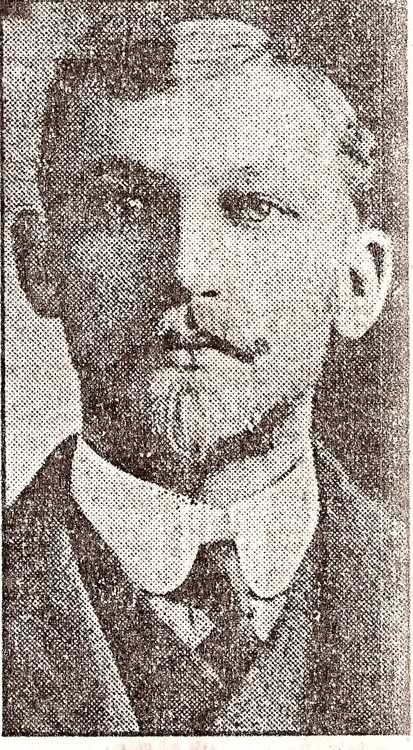
Peter’s death provided between $3,000 and $4,000 to Belle. Local townspeople found it hard to believe that Peter, being such an experienced hog farmer and butcher, would be so clumsy to have died from such an accident. The district coroner took a closer look at the case and announced that Peter Gunness had been murdered. He felt so sure of it that he put together a jury to review the case.
Belle’s adopted daughter, Jennie Olsen, was reported to have told a classmate, “My mama killed my papa. She hit him with a meat cleaver and he died. Don’t tell a soul.” However, when Jennie was brought before the coroner, she denied ever saying such a thing. Still, Belle somehow convinced the coroner that she was completely innocent of any wrongdoing. In 1906 Belle told neighbors that Jennie had gone off to College in Los Angeles. Unfortunately, this was not the case, as you will soon find out.
Belle Gunness is looking for love: “Triflers need not apply”
Belle hired Ray Lamphere, a local carpenter, in August of 1907 and they became on and off lovers. Though they had a rocky relationship, Ray had hoped to marry Belle. Belle kept Ray around because he was a big help on the farm, doing anything she asked of him, even possibly covering up evidence of Belle’s crimes. As great of a worker as Ray was, Belle needed more men to come to her farm so she could carry out her devious plans to become wealthy. She accomplished this by posting the following ad in newspapers across the Midwest:
"Personal — comely widow who owns a large farm in one of the finest districts in La Porte County, Indiana, desires to make the acquaintance of a gentleman equally well provided, with view of joining fortunes. No replies by letter considered unless sender is willing to follow answer with personal visit. Triflers need not apply."
Andrew Helgelien
In December of 1907, Andrew Helgelien, a bachelor and farmer from Aberdeen, South Dakota wrote to Belle in response to the ad. The two exchanged many letters, including this one written by Belle that was later found at Helgelien’s farm:
To the Dearest Friend in the World: No woman in the world is happier than I am. I know that you are now to come to me and be my own. I can tell from your letters that you are the man I want. It does not take one long to tell when to like a person, and you I like better than anyone in the world, I know. Think how we will enjoy each other's company. You, the sweetest man in the whole world. We will be all alone with each other. Can you conceive of anything nicer? I think of you constantly. When I hear your name mentioned, and this is when one of the dear children speaks of you, or I hear myself humming it with the words of an old love song, it is beautiful music to my ears. My heart beats in wild rapture for you, My Andrew, I love you. Come prepared to stay forever.
Sounds like quite the romantic letter, unless you know of Belle’s past. In that case the last line, “Come prepared to stay forever,” has a completely different and ominous meaning. Poor Andrew had no idea. In January of 1908, he came to La Porte to spend a couple of weeks with Belle, making Ray Lamphere extremely jealous. Andrew brought with him a check in the amount of $2,900, which he had drawn from his local bank. Andrew and Belle went to cash the check at the Savings Bank in La Porte. Both Andrew and the bank advised Belle to leave some of the money in the bank for safe keeping, but Belle insisted on taking it all in cash. Andrew disappeared the next day.
Andrew’s brother, Asle Helgelien became concerned when his brother didn’t come back home. He wrote a letter to Bell asking about Andrew whereabouts. Belle wrote back saying that Andrew was not at her farm and that he had probably gone to Norway to visit relatives there. Asle knew that his brother would do no such thing and told Belle so in another letter he sent, saying he thought Andrew was still in the area of La Porte. Belle wrote in return that if he wanted to come and look for Andrew she would help him conduct a search, but that a manhunt would cost money and that he should be prepared to pay her for her time and effort. Alse did eventually come to La Porte from South Dakota, but not until May, after the fire burned down Belle’s farm.
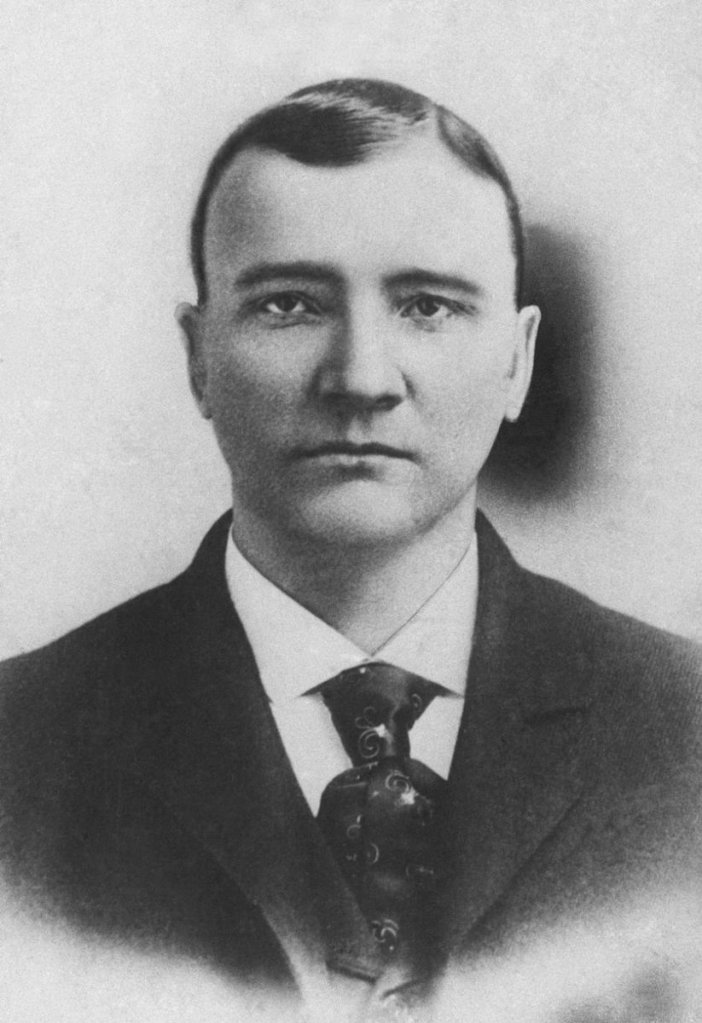
George Anderson, The One Who Got Away
George Anderson came from Tarkio, Missouri to visit Belle. During dinner one evening, Belle brought up problems she was having with her mortgage. George agreed to pay it off for her in return for her promise of marriage. Late that night, he awoke with Belle standing over him wielding a candle in her hand with a disturbing and frightening look on her face. When Belle saw that he was awake she ran from the room. George ran as well. He fled the house and went straight to the train station where he bought a ticket back to Missouri. Not many men were able to escape Belle, George was lucky.
Ole B. Budsberg
Ole B. Budsberg, didn’t have such luck. He was an elderly widower from Iola, Wisconsin who was last seen alive at the La Porte Saving Bank on April 6, 1907. While at the bank he mortgaged the land he owned in Wisconsin and signed over a deed, in return being paid several thousands of dollars in cash for the land. He then promptly disappeared. Initially, Budsberg’s two sons, Oscar and Mathew, didn’t know that their father had gone to visit Belle. Eventually, they learned of his destination and when they wrote to Belle inquiring about him, she responded that she had never seen their father.
There were numerous other men who showed up at Belle’s farm with money trying to impress her. George Berry from Illinois, Christian Hilkven who sold his farm for money to give to Belle, Emil Tell, John Moe. All men who went to visit Belle Gunness and were never seen or heard from again.
Problems for Belle Gunness
Ray Lamphere, who was still working at Belle’s farm as a hired hand was very much in love with her. He became jealous and would cause scenes because of all the men who would come to the farm hoping to win the affection of Belle. Belle fired Ray on February 3, 1908. She then when to the courthouse claiming Lamphere was not in his right mind and was a menace to society. She convinced authorities to hold a sanity hearing, in which he was declared sane and released. A few days later Belle was at the courthouse again saying that Lamphere came there and argued with her and that he was a threat to her family. Lamphere was arrested for trespassing. Lamphere didn’t give up and was arrested several more times for trespassing. He was acquitted, but Belle would tell everyone that he threatened to burn down her farm and murder her and her children. She never went to the police with the accusations against Lamphere. Many people thought this was because there were never any threats made to her by Lamphere. Maybe she was just making up those claims so that she could set further plans into motion and have a fall guy for it.
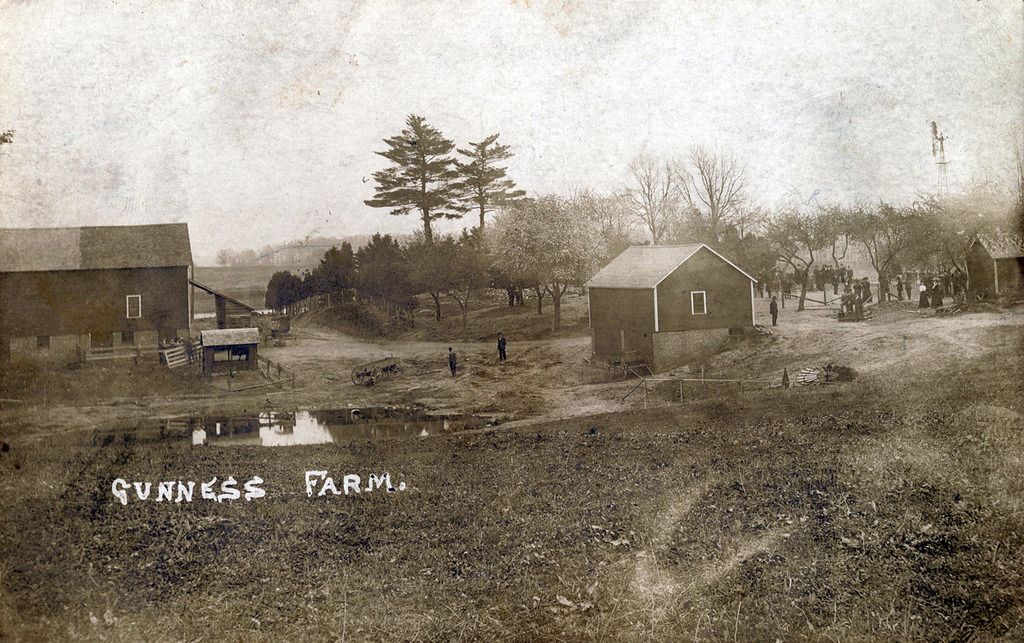
People were starting to notice things. Clyde Sturgis was a delivery driver who would drop off large trunks at Belle’s farm that she had ordered. He remarked that the heavyset woman would lift these enormous trunks “like boxes of marshmallows,” tossing them onto her wide shoulders and carrying them into the house. Passing farmers noticed that she kept the shutters on her house closed during the day and at night she would be seen digging in the hog pen. The brother of Andrew Helgelien was suspicious of her as well as the sons of Ole Budsberg. On top of all that she was having problems with Ray Lamphere. Things were not looking good for Belle Gunness.
April 27, 1908 was a busy day for Belle. She kept her three children home from school, Myrtle Sorensen was 11, Lucy Sorensen, 9, and Philip Gunness was 5. She went to a lawyer in La Porte, M.E. Leliter, to make out her will claiming she was afraid for her and her children’s lives because of Lamphere’s threats. In the will, she left her entire estate to her children. After leaving the lawyer’s office, she went to the bank her mortgage was through and paid off her property. Next, she bought a large quantity of kerosene. It clearly seemed as though Belle was preparing for something big to happen.
The Fire
Joe Maxson had been hired by Bell in February of 1908 after she fired Lamphere. The day after Belle’s busy day, April 28, 1908, Joe, who slept on the second floor of Belle’s house, awoke to the smell of smoke in his room. He opened the door to his room only to find wall of flames. He slammed the door shut and with no other choice jumped from the second-story window of his room. He ran as fast as he could to town to alert the fire department, but by the time they got there at early dawn, it was far too late. The farm was a smoking heap of ashes.
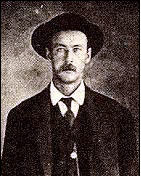
Four bodies were found, the three children were still in their bed. The last body was of a headless woman. The head belonging to her has never been found. County Sheriff Smutzer had heard about the supposed threats by Lamphere and immediately went looking for him as a suspect. When Lamphere was found he asked, “Did Widow Gunness and the kids get out all right?” An odd thing to say in the given situation. He proclaimed his innocence saying he wasn’t near the farm when the fire happened. A young man, John Solyem, came forward claiming that he had been watching the house and saw Lamphere running down the road from the Gunness house just before the place went up in flames.
Lamphere responded to the boy, “You wouldn’t look me in the eye and say that!”
Solyem replied, “Yes, I will. You found me hiding behind the bushes and you told me you’d kill me if I didn’t get out of there.”
With that, Lamphere was arrested and charged with murder and arson. All at once, people were swarming the scene. Investigators, sheriff’s deputies, coroner’s men, and many volunteers began to search the property for evidence.
Multiple neighbors and old friends of Belle Gunness who saw the woman’s headless body said that they were not Belle’s remains. Doctors measured the remains, and, making allowances for the missing neck and head, believed that the corpse was of a woman who was 5 feet, 3 inches tall and weighed no more than 150 pounds. Friends, neighbors and the local clothiers who made dresses and other garments for Belle was sure Gunness was taller than 5 feet, 8 inches and weighed between 180 and 200 pounds.
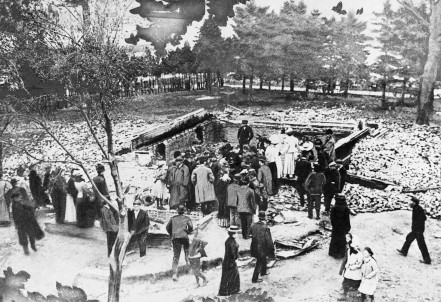
Authorities took detailed measurements of the body and compared them with measurements on file at several La Porte stores where Belle bought clothing and concluded that the headless body could not have belonged to Belle Gunness, even when the damage from the fire on the body was taken into account. The flesh of the body was badly burned, but intact enough to make this determination. Dr. J. Meyers examined the organs of the corpse and sent the stomach contents of the victim to a pathologist in Chicago, who months later, reported that the organ contained lethal doses of strychnine poison.
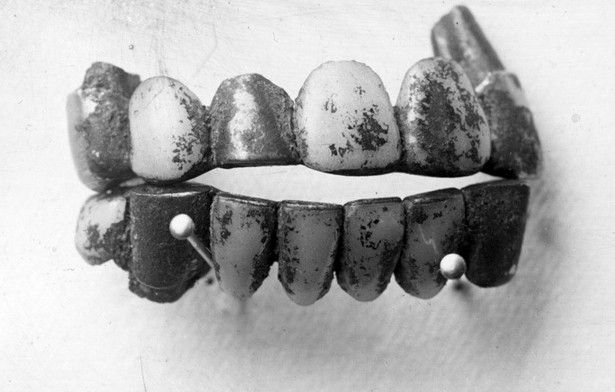
A former miner, Louis “Klondike” Schultz, was hired to sift through the debris at the Gunness property. On May 19, 1908 he found the remains of two human canine teeth with their roots still attached, porcelain teeth and gold crown work in between. Belle’s dentist identified the teeth as work he had done for Belle. This is what led to the coroner to officially conclude that the female body that was discovered in the ruins of the Gunness house was in fact Belle Gunness.
The Gruesome Discoveries
It was during this time, May of 1908, when Andrew Helgelien’s brother, Asle arrived in La Porte to look for him. He told Sheriff Smutzer that he believed his brother met with foul play while at the Gunness property. Joe Maxson, who had lept from his window to survive the fire that night, came forward saying that Belle had ordered him to bring loads of dirt by wheelbarrow to a large area surrounded by a high wire fence where the hogs were fed. Maxson saw many deep depressions in the ground that had been covered by dirt. Belle had claimed that the hole were full of rubbish. She wanted Maxson to fill in the depressions and make the ground level.
With the information from Maxson and at the urging of Asle Helgelien, Sheriff Smutzer brought along a dozen men to the farm and started to dig. On May 3, 1908 the body of Jennie Olson was found, the adopted daughter of Belle who had supposedly went off the college in Los Angeles. They found two small bodies of unidentified children. Eventually the body of Andrew Helgelien was unearthed and it was discovered that Lamphere had been wearing his overcoat.
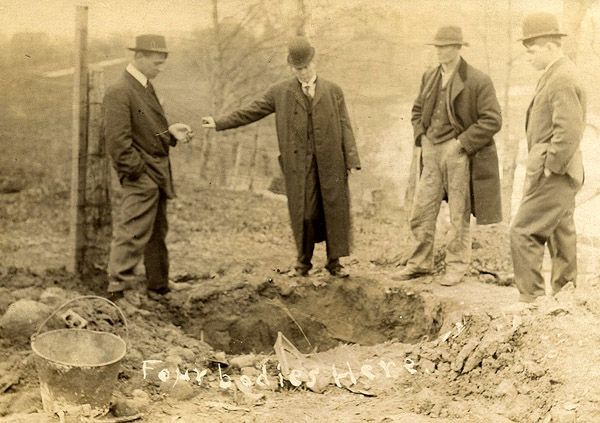
Day after day, the digging continued and one body after another was found in Belle’s hog pen. Ole B. Budsberg was among the bodies. Thomas Lindboe from Chicago, who was hired to work on the Gunness property three years earlier. Henry Gurholdt from Scandinavia, Wisconsin, who had planned to marry Belle a year earlier and whose body was identified by the watch found with it. Olaf Svenherud from Chicago. John Moe from Elbow Lake, Minnesota, whose watch was found in Lamphere’s possession. Olaf Lindbloom, age 35 from Wisconsin. Benjamin Carling from Chicago, who had told his wife he was going to La Porte to secure an investment with a rich widow. Benjamin’s widow was able to identify his remains by the three missing teeth in a skull that was found in La Porte’s pauper’s cemetery.
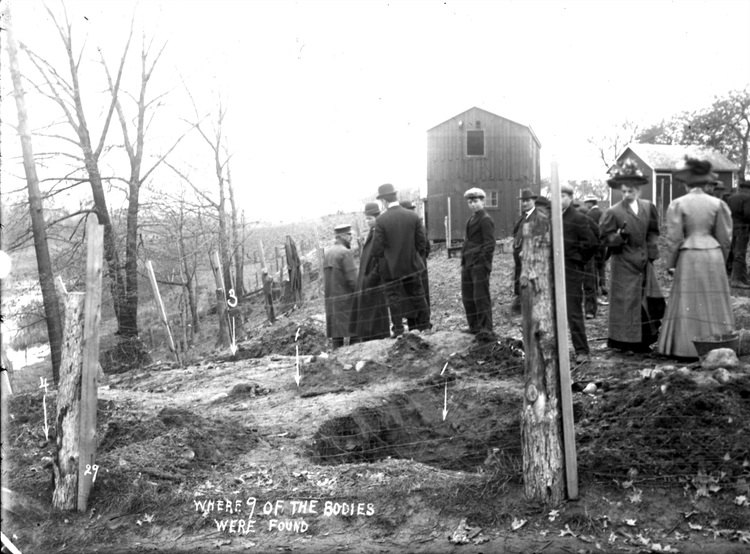
These were just the bodies that were identified. Many of the remains couldn’t be identified and the exact number of people that were unearthed from the Gunness farm is not known. It is believed that there could have been more victims who were never found. There were plenty of men who had gone missing after mentioning a wealthy woman in La Porte. There was a man named John H. McJunkin who left his wife in 1906 after corresponding with a La Porte woman. Olaf Jensen wrote to his family that he planned to marry a wealthy widow in La Porte. Bert Chase sold his butcher shop in Indiana and told friends of a wealthy widow he was interested in. Bert’s brother received a telegram saying his brother had been killed in a train wreck, but after investigation, it was found that the telegram was fictitious. It seems likely that these men could have also been victims of Belle Gunness.
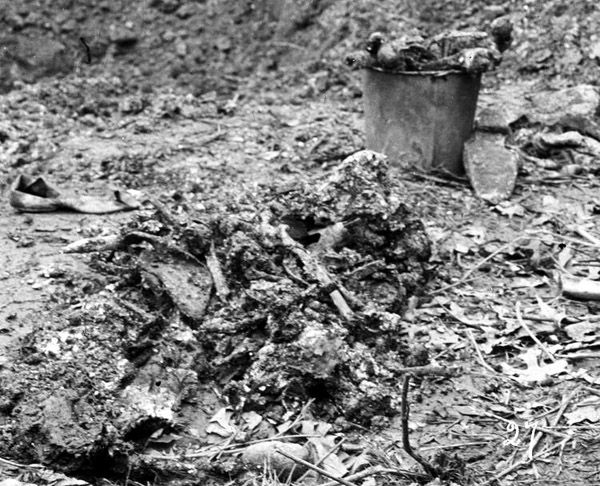
On May 19, 1908, the same day the teeth were found, seven more unknown victims were found buried in two coffins in unmarked graves in the pauper’s section of LaPorte’s Pine Lake Cemetery.
The remains of Andrew Helgelien and Jennie Olson were laid to rest in La Porte’s Patton Cemetery, near Peter Gunness. The headless female body, who may or may not have been Belle Gunness was buried beside her first husband, Mads Sorenson, at Forest Home Cemetery in Forest Park, Illinois.
Ray Lamphere’s Court Case and Deathbed Confession
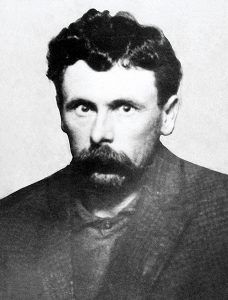
In court, Ray Lamphere’s main defense was hinged on his belief that the woman’s body found in the house fire was not that of Belle Gunness. Lamphere’s lawyer, Wirt Worden, found evidence that the teeth found in the ashes of the house couldn’t have been there during the fire. A local jeweler testified that the gold in the bridgework of the teeth had been found almost undamaged while the heat of the fire had melted the gold plating on watches and several pieces of gold jewelry that were found in the ruins of the home. Local doctors replicated the conditions by attaching a similar piece of dental bridgework to a human jawbone and placing it in a blacksmith’s forge. The real teeth crumbled and disintegrated while the porcelain teeth came out pocked and pitted with the gold parts quite melted. Joe Maxson and another man testified that they saw “Klondike” Schultz, the man who was hired to sift through the remains of the burned property, plant the bridgework there after taking it out of his pocket.
Ray Lamphere was found guilty of arson, but was acquitted of murder. On November 26, 1908, he was sentenced to 20 years in the State Prison in Michigan City. He died behind bars of tuberculosis on December 30, 1909.
Before Lamphere died, as he sought comfort from a clergyman in his final hours, he revealed Belle’s crimes, and that he had helped bury many of her victims, though he had never murdered anyone. He also swore that Belle Gunness was still alive.
Lamphere explained that when a victim arrived at the farm, Belle would make them comfortable, charming them and cooking them a large meal. She would sometimes poison his coffee and when the man was unable to defend himself, she would split his head open with a meat chopper. Other times she would wait until the man was asleep and chloroform him. Gunness, known to be a strong woman, would then carry the body to the basement where she would put it on a table and dissect it. Dissection was something she was good at, having received instructions on how to do it from her second husband, the butcher Peter Gunness. She would bury the remains in the hog pen and other areas around the farm. She sometimes dumped the remains in to the hog-scalding vat and covered them with quicklime. Lamphere said that if Belle was too tired to dispose of the remains, she would just chop them up and feed them to the hogs in the middle of the night.
Lamphere also had an answer to who the headless woman was that was found in the burned house. He said that Belle had lured the woman from Chicago, offering to hire her as a housekeeper only a few days before Belle decided to escape from La Porte. According to Lamphere, Belle drugged the woman, bashed her head in, decapitated the body, and tied weights to the head and threw it in a swamp. She dressed the body in her old clothes, removed her false teeth and placed them by the headless corpse so that people would think it was her who died. She then set the house ablaze and ran off.
Lamphere admitted to helping her by waiting for her by the road after the fire was set. Instead of going by this road, however, she ran across open fields, then disappeared into the woods. Some reports claim that Lamphere had confessed to taking Belle to Stillwell, a town about nine miles away, where she got on a train to Chicago.
Belle had become a rich woman from all the money she had taken from men over the years. Lamphere believes that she had killed 42 men by his count and had accumulated more than $250,000.
What happened to Belle Gunness?
Belle Gunness had withdrew most of her money shortly before the fire, which suggested that she was planning to run. For several decades, Belle was reportedly sighted in cities and towns all over the country. She was spotted in Chicago, San Francisco, Los Angeles, and New York. As late as 1931, she was reported alive and living in a Mississippi town where she owned a large amount of land. Sheriff Smutzer received an average of two reported sightings a month for more than 20 years. Belle became something like an urban legend with all the theories and stories surrounding what had really happened to her, earning her the nickname of Lady Bluebeard.
The woman’s headless body has never been positively identified. Belle’s fate has also never been proven. Some locals believed she was killed by Lamphere and others believe she faked her own death. In 1931, a woman going by the name of “Esther Carlson” was arrested in Los Angeles for the poisoning of a man named August Lindstrom for money. A couple of people who had known Belle claimed to recognize her in the photos of “Esther,” but a positive identification could never be made. If this were Belle Gunnness, she would have been about 10 years older than the age of 61, which Esther claimed to be. Esther denied that she was Belle, and that the proof was her work record in Hartford, Conneticut between 1890 and 1908. Esther Carlson died while awaiting trail for the murder.
On November 5, 2007, permission was granted by the descendants of Belle’s sister to have the headless body exhumed in an attempt to finally learn her true identity. The plan was to get DNA from a sealed envelope flap on a letter that had been found at the Gunness farm and compare it to the DNA of the body. Unfortunately, the forensic anthropologists were unable to obtain enough DNA from the envelope flap.
Over 110 years later, we are no closer to discovering what really happened to Belle Gunness. Was she killed in the fire of 1908? If so, did Lamphere set the fire? Could she have set the fire in a murder/suicide situation because she felt the pressure of suspicion closing in on her? If that’s the case, where did the head to her body go? Maybe it’s easiest to believe that the woman’s body found was another of Belle’s victims used to stage her own death. She had plenty of ill gotten gains at her disposal that could have been used to move away and live out the rest of her life quietly. With the amount of time that has passed, it seems unlikely that the truth will ever be known.
If you liked this, check out this related posts on Lyda Southard, who also liked to kill her husbands.
Search for The Gunness Mystery documentary on your streaming services.

 Historic Horrors
Great content! Keep up the good work!
LikeLike
Thank you!
LikeLike