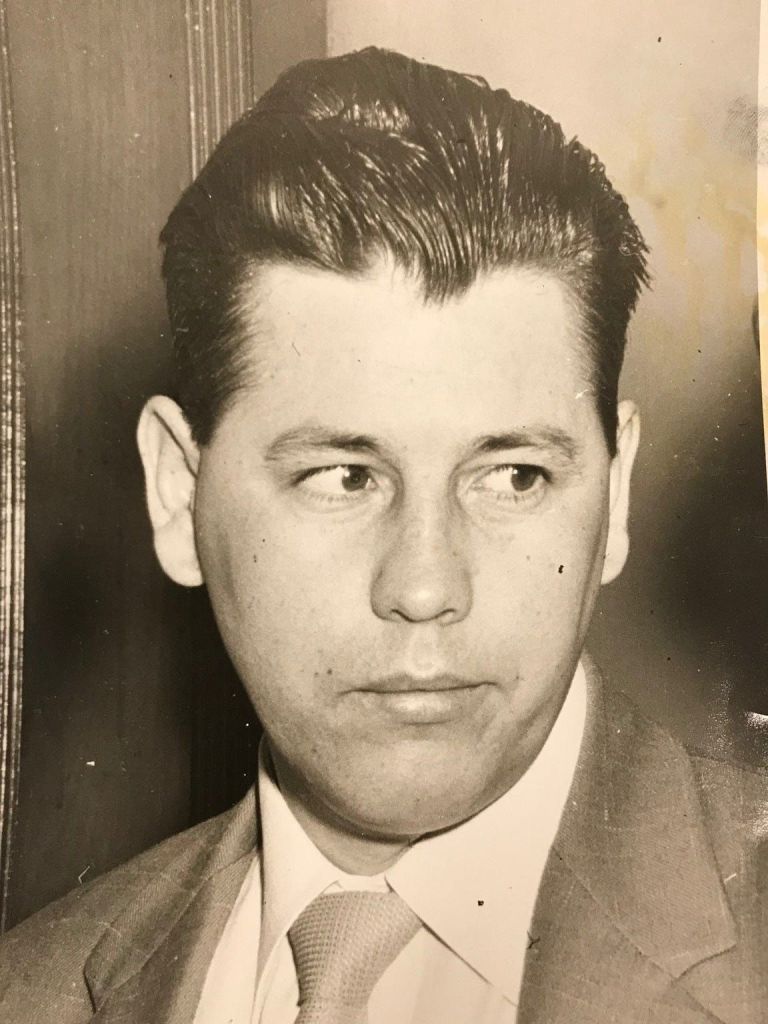
Leslie “Mad Dog” Irvin received his nickname due to the ruthless murders he committed and the way he was led into the courtroom for his trial chained like a dog. The prosecutor in the case even referred to Irvin as “Mad Dog” in his closing arguments. How many people fell victim to the hands of Leslie Irvin? How did he carry out the murders? Was he found guilty? If so, was he sentenced to death? Read on as we explore the life and crimes of Leslie “Mad Dog’ Irvin.
The Early Life of Leslie “Mad Dog” Irvin
Leslie Irvin was born on April 2, 1924 in Evansville, Indiana. Not much is known about Irvin’s early life at home. We don’t know what his parents were like growing up, or if there were any events that happened to explain the evil, murderous person he became.
According to classmates, Irvin was a sensitive kid who’s feelings were easily hurt when teachers scolded him in class. He insisted on being called “Les” or “Bud” by classmates because he didn’t like his name, Leslie, as it was a girl’s name.
The first signs of trouble began when Irvin was in high school. While attending Bosse High School in Evansville, Indiana, Irvin was known to have started fires in the building on five different occasions. Luckily, these fires never caused too much damage. When Irvin was found to be the culprit and was asked why he would do such a thing, he responded with a shrug of the shoulders.
Irvin’s Criminal Life Begins
It’s unknown when Leslie Irvin’s criminal activities began, but he started off as a common thief and burglar. He was caught and served nine years in an Indiana prison. When he was released he moved on to more heinous crimes.
Mary Holland
Leslie Irvin committed his first murder on December 2, 1954, at the age of 30. The victim was 33-year-old Mary Holland, who was three months pregnant.

Mary was working at the Bellemeade Liquor Store that night. She owned the store along with her husband and father. Irvin robbed the store of about $250 and killed Mary. What made the killing all the more senseless is that she would have handed over the money without a fight, as that was the store’s policy if such an event were to occur.
Mary’s husband, A.C. “Doc” Holland, had just finished his shift at another job and had at arrived at the liquor store around 11 pm to help Mary close up for the night. He was immediately suspicious when he walked in and saw the register sitting open on the counter with an opened bottle of whiskey next to it. Mary’s purse was laying open in the middle of the floor with her wallet gone. Mr. Holland called her name, but received no reply.
Upon a search of the store, Mr. Holland found his wife’s body wedged behind a toilet in the back of the store. Her hands had been tied behind her back and she had been shot in the head at close range.
Wesley Kerr
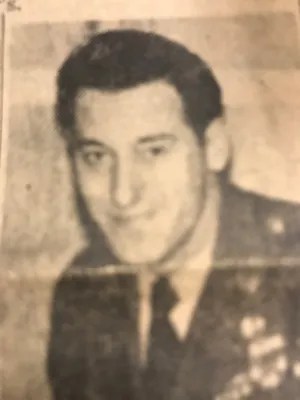
Three weeks later, on December 23, 1954, 29-year-old Wesley Kerr was found shot to the death at a gas stationed where he worked the night shift.
Shortly before his death he was finalizing his family’s Christmas plans with his wife. They had planned on spending Christmas Eve at home with their three young children, before heading to Tennessee to spend Christmas Day with other family. Kerr’s boss has gifted him a turkey for the holidays to thank him for his exemplary customer service at the gas station.
Instead of feasting on turkey for the holiday, his family held his funeral. Wesley Kerr was a military veteran who served in WWII and the Korean war.
Just like in the case of Mary Holland, Kerr was found in the bathroom with his hands bound and a single shot to the head. Similarly, the gas station’s cash register was found to be open and emptied.
With all the similarities, it didn’t take authorities long to connect the two murder cases. It was also found that the same type of weapon had been used in both killings, a .38-calibur revolver.
Wilhelmina Sailer
Irvin’s next murder came three months later on March 21, 1955. This time the victim was 47-year-old Wilhelmina Sailer, a housewife who was found murdered in her home near Mount Vernon, Indiana. Her 7-year-old son found her body on the living room floor when he returned home from school that day. Wilhelmina’s husband, John, arrived home minutes later. Mrs. Sailer’s purse was found open on her bed, the money inside it gone.
John had last seen his wife around 1 pm earlier that day when he came home for lunch. When he left she had been washing the dishes. About an hour later, a family member who lived a short distance down the road had witnessed a vehicle pull up to the house and a man had gotten out and went up and knocked on the door.
Like the others, her hands were tied behind her and she had suffered a single gunshot to the head.
The Duncan Family
On March 28, 1955, a week after Sailer’s murder, three members of the Duncan family were found dead in Henderson County Kentucky. Goebel Duncan, 51 and his son Raymond, 29, were found dead, facedown along a rural country road. Their hands had each been bound behind their backs using their own belts. Each had been shot in the head.
When police went to the Duncans’ house to further investigate, they only found more death. Maple Elizabeth Duncan, 20, who was Raymond’s brother’s wife lay dead across a bed also from a bullet to the head.
Investigators heard moaning coming from another room in the house where they found Goebel Duncan’s wife, Mamie, who was also shot in the head during this incident, but miraculously survived. Mamie was permanently blinded by her injuries and had no memory of the shootings when she awoke from unconsciousness.
The Duncan’s 2-year-old granddaughter was spared. When asked later by police, Irvin replied that she was spared because “I like kids.”
The Capture of Leslie “Mad Dog” Irvin
As police investigated the Duncan family murders, they interviewed a neighbor of the Duncans who witnessed members of the family standing in their yard talking to someone that morning as he was driving past the home. He also noticed a dark colored vehicle with Indiana plates that had damage to its left side.
Sometime later a group young men spotted a car parked off a rural road in Western Vanderburgh County. The car matched the description that was given in the newspaper of the suspect’s vehicle. The young men didn’t know for sure if that was the same car, so they yelled at the driver, claiming to be investigators, just for fun. The vehicle then sped off, but not before one of the boys wrote down the license plate number of the car.
After one of the boys mentioned the incident to his mother, she reported it to police. A search of records concluded that the license plate belonged to Leslie Irvin, who was on parole from a prison in Indiana after serving nine years for burglary.
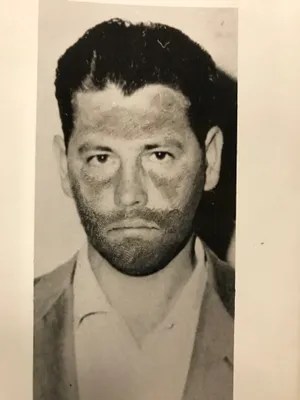
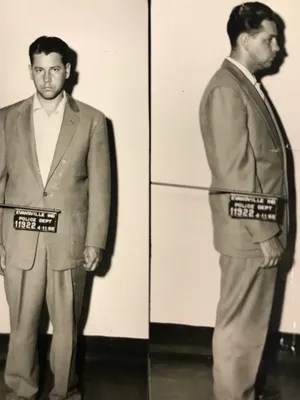
The eyewitness account of the young men led to the capture of Leslie Irvin. He was arrested at his place of employment, the SIGECO power plant in Yankeetown, on April 8, 1955. He was in possession of a wallet believed to have belonged to Wesley Kerr. On April 15, 1955 while in police custody, Irvin confessed to 24 burglaries across southern Indiana. He was charged with four murders and admitted to two more.
Trial and Sentencing
After some disagreement between Indiana and Kentucky about which state would put Irvin on trial first, it was decided that he would go to trial for the murder of Wesley Kerr first. There was a huge amount of publicity surrounding the case and Irvin’s lawyer immediately asked for a change of venue so that his client would receive a fair trial from an impartial jury. The request was granted, but only moved to the next county over where the publicity of the case was just has much.
Two more change of venues were requested as well as eight motions for continuances, all of which were denied. It was impossible to find people to serve on the jury who did not already believe that Irvin was guilty. When the court finally selected twelve people to sit on the jury, eight of them believed he was guilty before the trial started.
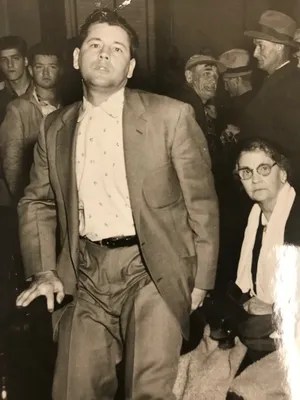
Leslie Irvin was found guilty for the murder of Wesley Kerr and was sentenced to death. Throughout the trial and during sentencing, Irvin showed no emotion. As he was sentenced to death his mother collapsed in tears in the courtroom. A photographer had a camera in her face as she wept. This angered Irvin and he stomped over toward the photographer to confront him. Irvin was pulled back and led away by police before he was able to get too close to the photographer.
Irvin Escapes
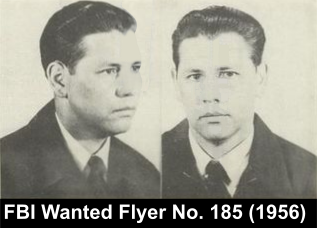
Irvin was being kept in Gibson County Jail in Princeton, Indiana. On January 20, 1956 as the prisoners were being woken for breakfast, it was discovered that Irvin was not in his cell. He had managed to escape. Irvin had made keys out of book covers, tin foil, and glue to aid in his getaway. He hitchhiked west, but was captured again on February 9, 1956 in San Francisco after trying to pawn jewelry that he had stolen.
In July of 1957 the U.S. Seventh Circuit Court of Appeals issued a stay of execution just hours before Irvin was to be put to death in the electric chair. How close was Leslie Irvin to being put to death? Well, his legs had already been shaved in preparation for the chair.
Then, in a move that shocked everyone, on June 5, 1961, the Supreme Court overturned his conviction. The Court believed that Irvin’s 6th Amendment rights had been violated and that he had not received a fair trial from an impartial jury.
After another trial in court, Irvin was again found guilty on June 13, 1962 and this time was sentenced to life in prison. Leslie “Mad Dog” Irvin died at Indiana State Prison on November 9, 1983 from lung cancer. He was 59 years old.
On October 12, 1962 the young men who noted Irvin’s license plate were each awarded $500 (about $4,000 in today’s money). One of the boys had died the year before in a car accident at the age of 17. His parents accepted the reward on his behalf.
What Made Leslie “Mad Dog” Irvin a Murderer?
Everyone who personally knew Leslie Irvin was shocked when the they learned what he had done. He was described as intelligent, clean-cut and friendly. Even his parole officer never would have thought he would be capable of murder:
“He came out to my house to report. I invited him to dinner a couple of times. He seemed (to be) such a nice guy. Just shows that sometimes you can be wrong.”
The Sherriff and staff at the prison claimed he was a model inmate.
“I’d say he was one of the cleanest prisoners we had,” former Gibson County deputy sheriff Frank Coomer told the Courier in 1983. “He kept his hair combed and his face shaved and took his shower every day. That’s more than most prisoners do, unless you make them.”
We will probably never know what made him murder these six people. Sure, he wanted to rob them, but in most these cases the victims most likely would have handed over whatever Irvin wanted without a fight. He must have gotten some kind of sick pleasure or sense of power by taking their lives so needlessly.
Many people believe that he was a sociopath. These types of murderers (think Ted Bundy) exude loads of charm and charisma and think they are master manipulators. They have no guilt or remorse for the crimes they committed. That sounds a lot like Leslie “Mad Dog” Irvin to me.
Sources:
https://en.wikipedia.org/wiki/Leslie_Irvin_(serial_killer)
https://1061evansville.com/the-story-of-evansvilles-most-notorious-serial-killer/

 Historic Horrors
Leslie Irvin came into my grandmas kitchen and made some noise and my grandmother confronted him about what he was doing in her kitchen. He asked her what the name of the street was in front of her house and she told him and he left. A family member called the police and they caught him days later in San Francisco. I thank God he didn’t kill her. It probably was that my grandmother was an old woman and maybe reminded him of his mother.
LikeLike